|
| | Fly
Fishing II, OSU PAC 179 class, Michael Gorman, instructor
Fly Fishing II PAC 179
(offered winter term only)
1 credit hour. Prerequisite: PAC 178, or equivalent
experience
Michael
Gorman, Instructor
phone: (541) 737-3222 email: gorman_flyfishing@hotmail.com
No
campus office,
but enquire in PAC office, Langton Hall 123
This course is intended to take the student
with a basic grasp of the skills of fly fishing ---- rudimentary fly casting,
knowledge of nymphing, wet fly, dry fly techniques, essential equipment
appropriate to a given fish species, fly selection, knots, and simple fly-tying
methods --- to the next level of proficiency, specifically as they pertain to
trout and char. In addition to demonstrations and discussions, there will
be PowerPoint presentations and video
excerpts that will serve as learning aids in this course.
There will be many in-class small group activities that involve internet
research utilizing smart phones or laptops.
Upon
successful completion of FLY FISHING II the student will be able to:
*Conduct a thoughtful and pertinent internet search of fly fishing topics
which contribute to making the student a knowledgeable and resourceful fly
angler.
*Execute and analyze a standard fly
cast AND a double haul fly cast.
*Generally identify immature and adult aquatic insect groups important in the trout diet.
*Make logical decisions about fly selection and appropriate fly fishing methods
in a given situation.
*Tie three basic fishing knots: double surgeon, clinch and Albright or nail knot.
*Neatly dub fur on a hook in the creation of an artificial fly. Select the
appropriate-size hackles for tying dry and wet flies..
*Describe at least two different effective methods for EACH fly fishing methods: wet fly
fishing, dry
fly fishing and nymphing.
*Know how to select and effectively fish emerger flies.
*Select appropriate fly rod/reel/line/leader/fly combinations for a given
species of trout or char in steams or lakes.
*Name ten streams or lakes in Oregon of fly fishing importance, their exact
location, fish species present, and appropriate time of year to fly fish these
with a reasonable chance of success.
WEEK 1 Slide
presentation: Winter Fly Fishing Opportunities in Oregon. Using Scout and Google
Maps apps on smart phones.
Review course outline & grading. Key fly fishing locations. General fly types:
wet, dry, nymph. Prior to next class students will should read and consider
printing out "Water Safety Basics" available on Blackboard.
Announcement: A fly fishing video competition for those students interested.
Details on blackboard: "Fishing Video Competition"
Using smart phones, or assisting a student who has one, students will research
these terms: wet fly, dry fly, nymph, Stimulator, Parachute Adams, Prince nymph,
Hare's Ear nymph, Wooly Bugger, and Bead Head Soft Hackle. A single
summary of group findings, including group member names, will be sent via email
to the instructor before class ends. Prior to next class students should
consider printing out "Fly Fishing Equipment Basics" available on Blackboard or
on the internet.
Class fly fishing outings: E. E. Wilson
Pond; McKenzie River.
WEEK 2
Small group activity: Access online article : Fly Fishing Equipment Basics".
Basic fly fishing equipment: fly rods and lines. Fly fishing knots
handout.
More basic fly fishing equipment: reels, backing, leaders, tippets. Tie knots in
class: clinch, surgeon, nail/tube knot.
Thursday: "Fly Fishing Equipment
Basics" Quiz. Prior to next class students should
consider printing out "Double Haul Casting Basics" available on Blackboard.
WEEK 3 Review
of "Double Casting Basics" + instructor casting demo. Student groups will
construct a tapered yarn casting line, and demonstrate fly casting principles in
the classroom with rod tip section
in prep for outdoor casting. Students will be asked to constructively
critique each other. If time allows: video excerpt from "Essence of Fly
Casting II".
Outdoor casting session.
WEEK 4 Small group research on YouTube students will view a brief
video of their own on nymph fishing for trout, dry fly fishing for trout and
nymph fishing for trout in streams. Possibility if time allows: Video excerpt from
“Fly Fishing for Trout”.
Continue researching nymphs, wet flies, and dry flies, and methods for fishing
them. Prior to next class students should read and consider printing out
"Water Safety Guidelines" and "Fly Fishing Lakes" documents available on
Blackboard.
Tuesday: Deadline for video competition
submissions.
Water safety discussion and trip planning.
Power Point presentation: “Advanced
Techniques for Fly Fishing Lakes”. Begin small
group activity: Listing of preparation steps, necessary skills, equipment
& flies, and thoughtful strategies for catching a fish in stillwaters.
A single summary of group findings, including group member names, will be
sent via email to the instructor before class ends.
Thursday Winners of video
competition will be announced.
Saturday: E. E. Wilson Pond fishing outing. Students
planning to attend must print out and sign "Liability Waiver" available on
Blackboard and submit it to the instructor prior to joining the organized class
outing.
Consider investigating float tube rental from Cascadia Fly Shop, 900 NW Kings
Blvd, or floating device rental from OSU Dixon Rec Center.
WEEK 5
Continuation of small group work on fly fishing methods for wet fly, dry fly,
and nymphing methods in stillwaters. Submit summary email to instructor before end of
class. A single summary of group findings, including group member
names, will be sent via email to the instructor before class ends.
If time allows: video excerpts: wet fly, dry fly, nymphing techniques.
Prior to next class students should read and consider printing out
the "Fly Tying Overview" and "Wooly Bugger" fly tying sheets available on
Blackboard.
Thursday: GRADING QUIZ
Fly tying demonstration: The Wooly Bugger.
WEEK 6 Class fly tying.
The Wooly Bugger.. Students will keep the flies they have tied.
Thursday: OPEN-NOTE MID TERM EXAM
WEEK 7 Power Point
presentation: Trout and Char Species. Small
group activity: List any behaviors, food preferences, and favored habitats of
the discussed trout species and chars.
A single summary of group findings, including group member names, will be
sent via email to the instructor before class ends.
Continue small group activity: Listing of
preparation steps, necessary skills, equipment & flies, and thoughtful
strategies for catching a fish in streams and rivers.
A single summary of group findings, including group member names, will be
sent via email to the instructor before class ends. Prior to next class
students should read and consider printing out "Advanced Aquatic
Entomology" document available on Blackboard.
Saturday: Class outing McKenzie River. Students
planning to attend must print out and sign "Liability Waiver" available on
Blackboard and submit it to the instructor prior to joining the organized class
outing.
WEEK 8
Power Point presentation: Advanced
Aquatic Entomology. Q & A.
Prior to next class students should read and consider printing out
"Aquatic Entomology" document available on Blackboard.
Small group class activity: Identification of preserved aquatic insects.
Prior to next class students will should read and consider printing out
"Fly Fishing for Steelhead" document available on Blackboard.
WEEK 9 Tuesday: CLASS PROJECTS DEADLINE.
Power Point presentation: “Fly Fishing for Steelhead”. Small group
activity: Using smart phone or laptop, research most commonly used two-hand rod
lengths and most popular fly line weights. Research to discover good
instructional two-hand rod fly casting video. A message with two video
links of group findings, and group member names, will be sent via email to the
instructor before class ends.
Small group activity: Listing of
preparation steps, necessary skills, equipment & flies, and thoughtful
strategies for catching a steelhead.
A single summary of group findings, including group member names, will be
sent via email to the instructor before class ends. Prior to next class students
should read and consider printing out "Fishing Photography Tips" study
sheet available on Blackboard.
WEEK 10
Power Point presentation: Fishing photography tips. Small group activity:
Using smart phones, develop some creative ways for photographing a fish --- 1.
with angler 2. with rod & reel 3. with
angler and rod & reel Students will email instructor with photo
attachments for the entire class to view before 1:30 pm during class.
Thursday: OPEN NOTE/OPEN BOOK FINAL EXAM.
GRADING FLY FISHING II,
PAC 179
Instructor: Michael Gorman
gorman_flyfishing@hotmail.com
541-737-3222 Phone message
1. Grading: the final grade,
scored on a point basis. 230-250 points, A; 225-229 points, A-;
221-224,
B+; 205-220, B; 200-204, B-; 196-199, C+; 180-195, C; 175-179, C-; 171-174, D+; 155-170, D; 150-154, D-, 149 points or less, F.
The point total is determined by the sum
associated with the following criteria:
*Participation: 80 points. After the first week of the term, 4 points are
subtracted from a starting total of 80 for each absence from participation in
class.
*"Fly Fishing Equipment Basics" quiz, Thursday of Week 2: 10
points.
*Grading quiz, Tuesday of Week 5: 10 points.
*Timed open note/open book demonstration of knowledge (mid term exam), week 6:
Thursday of Week 6: 40 points.
*Summary of fly fishing outing taken during the current term, due beginning of
class, Tuesday of Week 9: 40 points. (To fish public waters in Oregon, the
student must have a current, valid Oregon fishing license issued at most retail
stores that sell sporting goods. A one-day license is about $16 for
residents and nonresidents alike. Licenses of longer duration may be
obtained at great reductions in per day cost. Also, the student is responsible
for acquiring terminal gear, such as leaders and flies for their fishing outing.
At no cost, a rod, reel, and line may be checked out to the student from Langton
127 by the instructor only.)
*Extra credit: Satisfactory completion of one of the projects listed in #3
below, due beginning of class, Tuesday of Week 9: 10 points.
*End-of-term open note/open book demonstration of knowledge, week 10,
Thursday of Week 10: 70 points.
Maximum point total: 250.
Students
must have an ONID account in order to access their grade at the campus
Blackboard site. To get an ONID account, go to
http://www.onid.orst.edu
Once the student has logged into Blackboard, access
this class. If you cannot access the course,
you are not correctly registered
for this class. Again, you must have an ONID account in order to access your
final grade.
2.
Submit a type-written summary of a fly fishing outing taken during the current term: 150 – 200 words, not
including the headings. Hard copies only, no emailed projects. Deadline:
beginning of class, Tuesday of Week 9.
Task #1: Copy/write out the first five heading
items below on your paper (not just the numbers "1", "2". etc.) . Under each heading, write your response for that
heading. (5 points)
1) Date and stream or river fished, and its general geographical location
(5 points). (Pretend your instructor does not know geography except for
Corvallis.
Example: On Saturday, Sept. 31, I fished Steelhead Creek. From Corvallis,
travel south on Hwy 99 for 26 miles to Harrisburg. Turn west (right) onto to Hwy
66. In 13 miles arrive at Steelhead Creek Park. Fished immediately below the
bridge.)
2) Equipment used, including brand names (rod, reel, fly line,
leader) and flies used. (5 points);
3) Description of the fishing (not casting) techniques/presentations of
the flies used. Describe/explain how you
presented the fly to the fish (5 points); These are not
a total description of the techniques:."I used the roll cast" or "I used
the nymphing technique". Mention the direction of the cast, where the fly
is in the water column, how you affected (or not) the drift of the fly, and any
adjustments you made in an attempt to draw a srike from a fish.
If you used the "natural drift" or "nymphing" methods to present your fly,
you must describe/explain what the "natural drift" or "nymphing"
method is.
4) Get any strikes? Catch any fish?
5) Significant fishing “lessons” learned (5 points).
6) Place a photo of yourself at the river during your fishing day on the
bottom portion of your paper. (5 points)
7) Use spelling and grammar checks on your summary, AND write at the bottom
of the page: "I have used grammar and spell check when writing this report",
followed by your hand-written signature. (5 points).
8) Papers should include PAC course number and class meeting days and time (4
points), and papers should not exceed more than one side of a page of
12-point typed text (5 points). Due at the beginning of class Tuesday of Week
9.
9) On the back of your paper, or on an attached second sheet, place a
photocopy of your fishing license. (5 points)
3.
For extra credit, select, complete, and submit one of the
following on or before the beginning of your regular class meeting, Tuesday
of Week 9: Maximum 10 points.
A. A display of 10 different (altering just the size or colors is
NOT "different") fly patterns tied by the student during the current term. These
will be mounted and labeled (in type, not hand-written), and
neatly displayed. Typed labeling accounts for 5 points of the total. Display
method is the choice of the student. A reminder: the difference between
student-tied flies and purchased, commercially-tied flies is usually very
obvious to the instructor. A reminder: the difference between student-tied flies
and commercially-tied flies is often extremely obvious.
To receive credit for this project,
the student must write on the back of their display, or on a separate piece of paper, write: "I have
personally tied (made) these flies during this term." then, place your signature
under the statement, and the date.
B. Collect 10 different aquatic organisms from ponds, streams or lakes,
each in its own glass vial (with 50/50 mixture of tap water and rubbing
(isopropyl) alcohol) available from OSU Bookstore. Each organism must be at
least 1/3" long. Eggs of any organism are not acceptable. Your
instructor will help with general identification if done so at least one week
prior to submission deadline.. Create a typed sheet referencing each numbered
vial with:
1) organism I.D. (examples: caddis larva; mayfly nymph; midge adult; midge pupa)
2) name of pond, lake or stream where it was captured
3) general habitat for each--- examples: fast water, stony bottom, vegetation at
river's edge, slow water, on dead wood in water, etc
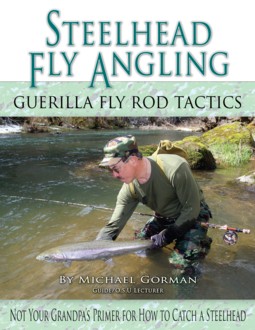
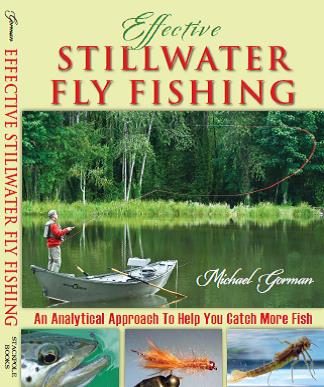
C. Read 3 chapters of Effective
Stillwater Fly Fishing, or 3 chapters of Steelhead Fly Angling,
both written by Michael Gorman..
1. For each of the three chapters, write the chapter title.
2. Under each chapter title write a two sentence summary of the chapter.
3. Under each chapter title write a two sentence comment about its
understandability, level of interest for the reader, and anything found to be
humorous.
4.
To receive credit for this project,
at the conclusion of this paper write "I have read these three chapters in their
entirety.", and, then, place your signature under this statement.
Links of interest:
"A Typical Winter Steelhead Fishing Day
--- Start to Finish"
"Know Your Quarry --- The Steelhead Life
Cycle"
"Fly Fishing Equipment Basics"
Must reading for Fly Fishing II
Late submissions, for any
reason, will not be accepted for any credit, INCLUDING ABSENCE FROM CLASS.
All summaries and projects are due no later than the beginning of class
Tuesday of Week 9.
Note: Students absent from class, for any reason, are responsible for securing
notes from another student in class.
If there should be an obvious typing error or conflict of dates concerning
deadline dates, or dates concerning the quiz, mid term exam, or final exam, the
student will not be excused for missing the deadline. Announcements will
be made in class lectures as deadlines or testing dates approach. These
announcements will supersede any typo errors. Students are responsible for
knowing this.
A few recommended books and
authors: A few
recommended video titles:
The Orvis Fly Fishing Guide by T. Rosenbauer
Fly Fishing for Trout, 3M
Fishing in Oregon by Casali and Dinesse
Strategies for Selective Trout, 3M
Western Hatches by Hafele and
Hughes Advanced
Strategies for Trout, 3M
Fly Casting Illustrated by F.
Amato Fly
Fishing for Bass, 3M
Lake Fishing with a Fly by Kaufmann and Cordes
Essence of Fly Casting, Kreiger
Steelhead Fly Fishing and Flies by T.
Combs Fly Fishing for
Pacific Steelhead, 3M
Please note:
Oregon State University provides clear definition and sanctions for
academic dishonesty. As a result, academic dishonesty of any kind is not
tolerated. Students caught cheating, plagiarizing, or participating in any form
of academic dishonesty will receive an F on the assignment or test (and possibly
an F in the course). A formal report to the chair of the Department, to the
Dean, and to the Student Conduct Program will be made.
If you have any questions
about the extent and severity of sanctions that may result from dishonest
behavior, I suggest that you take time to read the OSU Student Handbook or
access the OSU Student Conduct Website at:
http://www.orst.edu/admin/stucon/achon.htm
Statement of Risk:
Risk is associated with many of life’s activities, including PAC classes. The
College of Public Health and Human Sciences classes will seek to minimize these risks by providing safe activity areas where
possible, adequate equipment, and capable instruction. It is highly
recommended that you provide yourself with a student health/accident insurance
policy. These are available through the University, private carriers, or
through a family policy. If uninsured, minor accidents or health problems can
lead to great expense. If you have a condition that might affect or be affected
by participation in this PAC class, you are encouraged to so inform your
instructor either verbally or in writing. Should you become ill or
injured during class time, please inform the instructor or have a fellow student
do so. If you must leave class because of illness or injury it is recommended
that another student accompany you.
Sharp hooks and tools used during this class have an obvious inherent danger.
Use common sense and precautions at all times. When on a fishing outing, common
sense and precautions are urged when using sharp hooks (wearing polarized eye
glasses is recommended at all times to protect your eyes and assist in safe
wading) and wading in swift currents or walking on slippery rocks. If you
perceive dangerous conditions that cannot be counteracted with common sense and
reasonable precautions, desist and/or speak with your instructor.
Statement for
Students with Disabilities
Accommodations are collaborative efforts between students, faculty
and Services for Students with Disabilities (SSD). Students with accommodations
approved through SSD are responsible for contacting the faculty member in charge
of the course prior to or during the first week of the term to discuss
accommodations. Students who believe they are eligible for accommodations but
who have not yet obtained approval through SSD should contact SSD immediately at
737-4098.
Focus Questions and Important Info to know --- Have
these in your notes!
*Name 10 Oregon
streams or lakes (and general locations) that have available year-round fly
fishing opportunities.
*Name six different species of trout and char you can catch in Oregon.
Name two identifying physical and/or behavioral characteristics that would
distinguish one species from the others.
*Identify the Top Six flies recommended in class. Be able to identify an
artificial dry fly from a wet fly from a nymph.
*Besides, recommended rod lengths and "weights", what qualities would you
look for in a good fly rod.
*Know: recommended fly rod lengths/weights, leader lengths, appropriate fly
reel size, different reel drag systems.
*What factors weigh into the retail price of a fly rod? Are all
rod-building graphite fibers the same? Guide numbers?
*Can you interpret "WF-6-F" as it relates to the attributes of a fly line?
Best choice in fly lines for streams and lakes.
*Name three desirable attributes of braided Dacron as fly line backing.
*Leaders: appropriate length and diameter. How is diameter of tippet
commonly measured?
*Difference between leader and tippet. Correlate "X" number with inches.
Appropriate "X" number for hook size?
*Know the five guidelines for basic fly casting as discussed
in class: Eat The Apple With Care.
*Describe the general guidelines for performing a Double Haul fly cast.
What is a "haul"?
*List four items an angler can wear of have with them
that contribute to safety while fishing.
*List three possible injuries or health-threatening
conditions in a fishing environment.
*What is hypothermia? Name three symptoms that
indicate an angler may have hypothermia.
*List three measures that can be taken to prevent
hypothermia.
*Name three things you can do to help someone with
hypothermia while waiting for medical assistance.
*Know the basic presentation method/strategy for dry flies,
wet flies, and nymphs.
*Best line for fishing nymphs deep along a stream bottom? Single best line
recommended for fishing nymphs in lakes? What is special about the Mastery
Stillwater fly line? How quickly does it sink? Interpret WF-4-S code.
*Know some advanced presentation methods/strategies for dry
flies, wet flies, and nymphs, lakes and streams.
*What is "drag" as it relates to the drift of an artificial fly in a
stream? Name 3 methods for preventing drag.
*How would you use a fish stomach pump? What is a shock absorber leader?
A braided leader? What is Gink? What is Xink? Name three types of strike
indicator materials.
*To the majority of feeding-selective trout: what is MOST important about
your fly? Color, size or shape?
*Can you tie a clinch knot, surgeon knot, and an Albright knot? In
assembling your backing/fly line/leader/fly system, where is each of the
aforementioned knots used?
*Wooly Bugger: name materials and tools used to
construct the fly. Tail length?
*What is a "hackle"? Bird (and gender) producing the most commonly used
hackles? From what bird do we get marabou feathers? What is a half-hitch knot?
*Be able to describe identification differences among adult AND immature
caddisflies, mayflies, midges, and stoneflies, damselflies, and dragonflies.
Wings at rest, wing pads, tails, claws, antennae, gill locations, and other
unique identifying characteristics. Contrast complete vs. incomplete
life cycle.
*Most important trout-food insects in streams? Most important trout-food
aquatic organisms in lakes?
*What two readily-available liquids were recommended to be mixed for
preserving aquatic organisms?
*How do the numbers and sizes of trout in a quality lake compare with those
in the average trout stream?
*What is a "polarized" glasses lens? What does polarization do for the
angler?
*Why are waist-high (NOT hip) or chest-high necessary to be a
consistently effective stream fly angler?
*Why is a floating craft necessary to be an effective lake angler?
*List three outdoor photography tips which contribute
to taking better photographs of fish and fishermen.
Click here to return to the OSU
PAC classes menu page
|